kabarsula World leaders must break fossil fuels’ grip on climate policy bandar SLOT INDONESIA
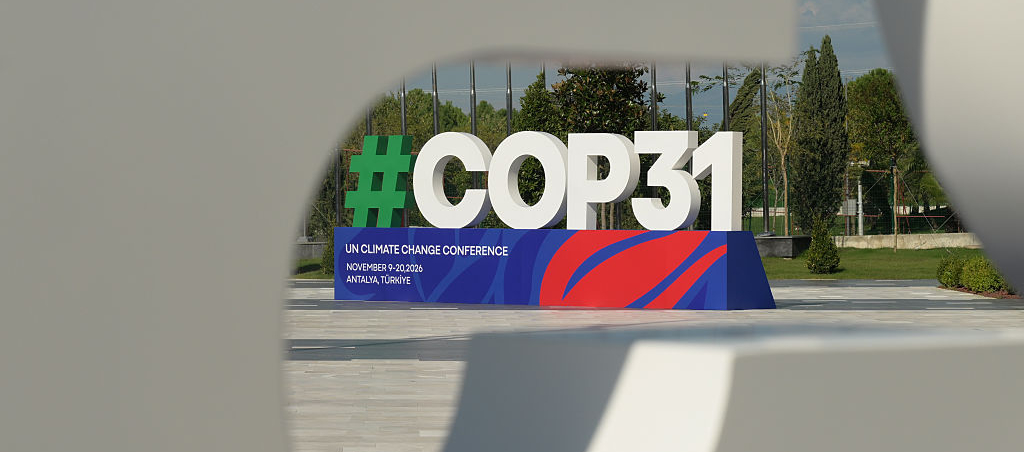
World leaders at COP31 in Türkiye must stop backing the fossil fuel industry and start delivering the rapid, equitable phase-out that science, human rights and international law demand, Amnesty International said today.
“The world is not running out of climate warnings. It is running out of excuses. After more than 30 years of climate negotiations, governments can no longer hide behind promises of future action or avoid confronting their fossil fuel industry allies. The climate crisis is not a failure of knowledge, but a failure of political courage. It is time to break the stranglehold of corporate power over political decision-making and end the fossil fuel era before it ends us,” said Marta Schaaf, Programme Director for Climate, ESJ and Corporate Accountability at Amnesty International.
The climate crisis is not a failure of knowledge, but a failure of political courage.
Marta Schaaf, Programme Director for Climate, ESJ and Corporate Accountability at Amnesty International
The latest assessment from UN Environment Programme (UNEP) delivered a stark warning ahead of COP31: the world is on course to overshoot 1.5°C. Governments, especially those most responsible for the climate crisis, remain dangerously far from taking the action needed to limit the scale and duration of that overshoot and bring temperatures back down. Communities are already being devastated by droughts, wildfires, intense storms, floods, melting glaciers and rising seas. Every additional fraction of warming will deepen the harm to human rights. Overshoot itself is dangerous; tipping points will be triggered and other irreparable harm will occur, irrespective of future temperature reductions.
Governments must now translate their promises into concrete decisions that cut emissions, accelerate the phase-out of fossil fuels, finance just transitions and protect people from worsening climate harms.
This is not optional. The International Court of Justice has clarified that states have obligations under international law to prevent significant climate harm, regulate activities contributing to climate change and cooperate to protect present and future generations. COP31 is a critical test of whether governments will act on those obligations.
“UNEP’s warning should jolt world leaders into bold and decisive climate action. Even if temporarily exceeding 1.5°C becomes unavoidable, it must never become an excuse for surrender or further delay. COP31 must limit the scale and duration of the overshoot, bring temperatures back down and protect people from even greater harm.,” said Marta Schaaf.
“Every fraction of a degree, and every year of delay, matters to human and to planetary life.”
COP31 must deliver collective action
The climate crisis transcends borders, but its consequences are deeply unequal. The catastrophic floods in Nepal and Tibet following a partial Himalayan glacier collapse showed how communities with the fewest resources are often exposed to the gravest dangers. It also underscored the urgent need for international cooperation and adequate funding from higher income countries to fund a just transition and climate resilience in lower income countries.
“No country can confront this crisis alone. Those who have contributed least to global warming are often suffering the greatest harms. COP31 must deliver collective action that reflects this profound injustice,” said Marta Schaaf.
COP31 must deliver concrete outcomes that advance a just and human rights-consistent transition:
- It must establish a strong Belem-Antalya Mechanism for Just Transition with a mandate to deliver on human rights and the ability to deliver support for just transitions;
- implement the Gender Action Plan, including by developing robust guidelines for the protection of women environmental defenders;
- ensure the second Global Stocktake is rooted in human rights and shaped by affected communities, including through Global People’s Assemblies;
- advance Loss and Damage as a separate agenda item and adequately replenishing the Fund for responding to Loss and Damage;
- tackle the scale up of climate finance needed including through formal negotiations on the Climate Finance Work Programme and focus it on implementation of Article 9.1 of the Paris Agreement;
- and begin reforming the way UN climate governance works.
Governments must accelerate a full, fast, fair and funded fossil fuel phase-out to limit any overshoot of 1.5°C, according to their responsibilities and capacities, and bring temperatures back down. The transition to electrification must be through increasing renewable energy and must protect workers, Indigenous Peoples and frontline communities, without reproducing existing abuses or creating new fossil fuel demand, including from AI data centres.
High-income countries with the greatest historical responsibility for greenhouse gas emissions must massively increase grant-based climate finance, including through higher taxes on the ultra-rich, fossil fuel companies and their financial backers. This funding is essential for lower-income countries to cut emissions, adapt, deliver just transitions and address loss and damage, including through climate reparations.
Türkiye and Australia face a climate leadership test
As COP31 host and negotiations lead, fossil fuel producers Türkiye and Australia face a critical leadership test. Yet both countries continue to face criticism over their ongoing reliance on fossil fuels. Türkiye remains heavily dependent on coal and plans to expand fossil gas production, while Australia is one of the world’s largest exporters of coal and liquefied natural gas.
“Türkiye and Australia cannot claim climate while locking the world into decades more fossil fuel dependence. Leadership means accelerating the end of fossil fuels, not finding new ways to prolong their use,” said Marta Schaaf. leadership
Governments must also confront the political and corporate interests obstructing a full, fast, fair and funded fossil fuel phase-out. COP31 must not be derailed by undue fossil fuel influence, which requires a robust accountability framework to exclude all conflicts of interest, and ensure affected communities are heard.
Around the world, Indigenous Peoples, environmental human rights defenders and affected communities are resisting destructive projects and defending their lands, livelihoods and futures.
Amnesty International has documented grassroots climate action across Australia, Brazil, Canada, Ecuador and Türkiye. These movements are essential to a fair and effective transition, yet Indigenous Peoples and other affected communities are routinely excluded from decisions while those defending them face criminalization, intimidation and reprisals.
“The people defending forests, rivers, ancestral lands and communities from destructive projects are showing governments what climate leadership truly looks like. They must be protected and heard, not criminalized, intimidated or excluded from decisions about their futures,” said Marta Schaaf.
There can be no climate justice without the freedom to demand it.
Marta Schaaf
Türkiye must protect civic space at COP31
Türkiye must ensure that everyone attending COP31 can participate safely and freely, without discrimination, intimidation or reprisals. This is particularly urgent as pressure on civic space and anti-rights rhetoric deepen fear and division. LGBTI+, environmental and other defenders facing intersecting discrimination must receive effective protection.
COP31 must remain open to public scrutiny, peaceful protest and dissent, with affected communities able to shape decisions about their futures without fear of reprisals.
“There can be no climate justice without the freedom to demand it. Türkiye and all governments attending COP31 must protect peaceful protest and ensure affected communities carry more weight in negotiations than the fossil fuel industry,” said Marta Schaaf.
BACKGROUND
Ahead of COP31, Amnesty International released its detailed technical recommendations for climate action and has joined calls for ambitious climate finance, recognition and protection of environmental human rights defenders and requirements for the “35 by 35” electrification target.
kabarsula SLOT