kabarsula ‘It’s what’s outside the window’: The five principles behind Viking’s distinctive design bandar SLOT INDONESIA
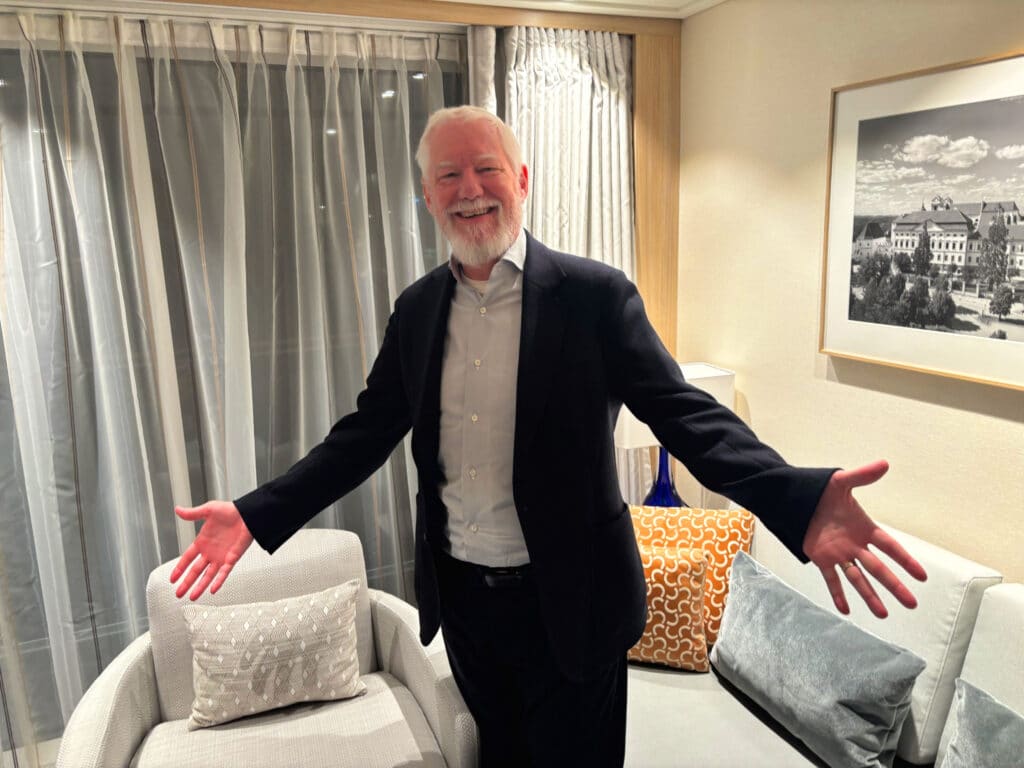
Viking’s river ships are known for their light-filled interiors, tasteful Scandinavian aesthetic, and sense of spaciousness.
On board the newly named Viking Rota in Amsterdam last month, designer Richard Riveire explained the five principles that guide the formula, and why some of the most important details are the ones guests barely notice. Riveire admits he is slightly claustrophobic.
That mild discomfort influences the way he thinks about the ships he’s been designing for Viking since the early days, when the cruise line had a fleet of just 12 vessels.
With a background designing hotels for brands including Four Seasons and Ritz-Carlton, ships presented Riveire with a different challenge: how to make limited spaces feel comfortably spacious.

Letting in the light
On a tour of Viking Rota, he pointed to some of the tricks used to make spaces feel larger and lighter, from carefully considered sightlines and mirrors to one particularly important feature: windows.
The aim is to avoid rooms that leave guests feeling enclosed, while keeping them connected to the reason they came aboard in the first place.
“We are all about what’s outside the window,” Riveire says. “It’s not what’s here. What’s outside the window is exciting.”
It’s a deceptively simple idea behind a design identity that has become unmistakably Viking. When Riveire first became involved with the cruise line, their early vessels had been acquired from elsewhere and the company was still working out what its own ships should look and feel like.
He describes the river ships that followed as the “test kitchen” for what Viking would become.
“It turned out to be pretty successful, and we went on from there,” he says.

What emerged was a philosophy built around five principles: Nordic heritage, residential modernism, craft, nature and exploring the world in comfort.
Walking around Rota with Riveire, these principles reveal themselves in surprisingly small details.
Nordic heritage is perhaps the most obvious. Pale woods, clean lines, and the simplicity associated with Scandinavian design, but Riveire’s references go further back in time.
At the bar, for example, the overlapping treatment of the timber recalls the construction of the original Viking ships, where wooden planks overlapped one another along the hull.
Most passengers might never make the connection, but subtle details like these quietly root a contemporary ship in the culture and history behind the brand.
Residential modernism is about how the spaces feel.
Riveire wants guests to be comfortable in them, rather than impressed by them from a distance. Furniture and lighting have a quiet domestic quality, spaces are designed to be used, and there’s no flashy theatricality. The goal is to make the ships feel comfortable and familiar rather than formal, more like a well-designed home than a grand hotel.
For a guest spending a week or more on board, the effect is important. The ships feel less like a succession of public venues and more like somewhere to settle into.

Then there’s craft, which reveals itself when Riveire draws attention to details you could easily walk straight past.
The embroidery on a chair is a good example. It isn’t there to dominate the room, but adds another small layer of workmanship and texture. Joinery, fabrics, and other finishes gently bring character to interiors that remain deliberately understated.
There’s detail everywhere, but nothing demands that you notice it.
Nature, meanwhile, is about more than choosing natural materials.
Here Riveire’s claustrophobia has been instructive. Windows, light, and views are deliberately worked into the ship so guests maintain a visual connection to their surroundings. Mirrors can amplify the sense of space, but wherever possible it is the real view that matters.
On a river cruise, where the scenery can be changing by the minute, that means the landscape outside becomes part of the interior.
And that leads naturally to Riveire’s fifth principle: exploring the world in comfort.

For Riveire, there’s a reason Viking’s interiors are deliberately restrained. Viking journeys are about exploration and discovery, so day of excursions ashore will likely mean hours absorbing architecture, food, crowds, sounds, and the stimulation of being immersed somewhere new.
Back on board, the subdued palette, natural materials, and uncluttered spaces give the senses somewhere to rest. Rather than competing with everything guests have experienced during the day, the ship becomes somewhere to retreat, recharge and watch the world continue to pass outside.
Comfort, of course, means more than soft chairs and lighting.
“The lesson I had to learn is the beauty of cruising is you unpack,” Riveire says. It sounds obvious until you consider the implications inside a cabin, where every millimetre counts. Viking works hard to turn otherwise unused volume into storage, giving guests somewhere to put their belongings and helping the room remain uncluttered.
“You take every little possible place to make it useful,” he says.
I’m from California, right? You have to have indoor-outdoor living.
It’s another way of creating a sense of spaciousness without simply adding square metres.
In Rota’s Explorer Suites, some of the cleverest thinking is completely invisible.
Sitting above the ship’s engines, the suites are effectively constructed as free-floating steel boxes on resilient mounts, which Riveire likens to shock absorbers, helping isolate guests from noise and vibration.
Outside, meanwhile, sizeable terraces extend the living space again.
“I’m from California, right?” Riveire jokes. “You have to have indoor-outdoor living.”
The quick switch
Even maintaining Viking’s familiar appearance requires an unusual amount of work.
Asked what happens if somebody spills red wine on the carpet, Riveire explains that Viking keeps replacement furnishings and materials in Europe, allowing damaged items to be switched out quickly.
“One thing I learned in the hotel business was whatever you can imagine will happen,” he says. “It is going to happen.
“You never want the guests pulled out of the moment.”

Perhaps that’s the thread connecting his five principles.
Nordic heritage gives the ships their identity without resorting to gimmicks. Residential modernism makes their public spaces somewhere to actually linger. Craft rewards closer inspection. Nature brings light, space, and the passing landscape inside. And exploring the world in comfort gives guests somewhere calm to recharge to when the exploring is done.
The clever part is how discreetly much of it happens.
An overlapping piece of timber recalls a Viking ship. Embroidery gives a chair an extra layer of Norwegian detail. A mirror makes a room breathe a little more. Storage swallows the contents of a suitcase. Engineering beneath an Explorer Suite helps keep it quiet.
And through it all, there are the windows.
Because if Riveire has done his job properly, sooner or later you should stop looking at the ship he designed and start looking through it.
“What’s outside the window is exciting.”

kabarsula SLOT