kabarsula EXCLUSIVE: ‘We’re in the business of reassuring’ – Dubai Airports’ Paul Griffiths bandar SLOT INDONESIA
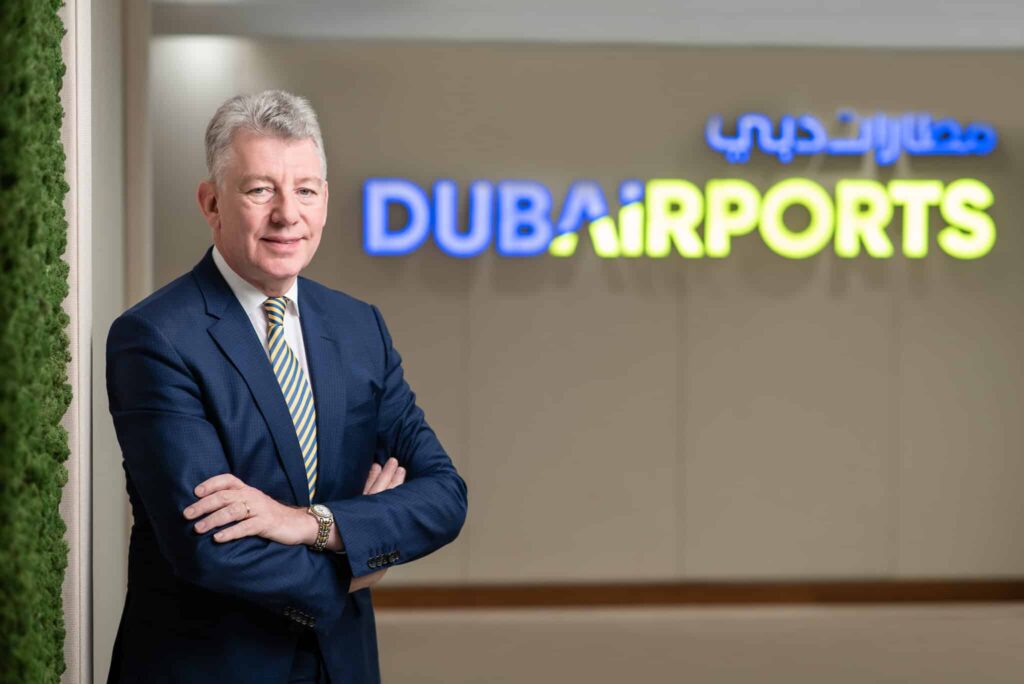
Nearly 20 years after taking the controls at Dubai Airports, CEO Paul Griffiths tells Nancy Hromin why airports should think like hotels, why the passport’s days are numbered, and why Australia remains a top-five market.
If a headhunter tells you a job is about “maintaining the success” of what’s already there, Paul Griffiths has some advice: never believe them.
“If there was any success to be maintained, they’d be maintaining it on their own, wouldn’t they?” the Dubai Airports CEO told Travel Weekly in an exclusive sit-down.
Griffiths was running London Gatwick when Dubai came calling in 2007. The brief sounded simple enough: take the airport into the private sector and get it ready for Emirates’ incoming fleet of A380s. Peel back the layers of the onion, though, and he found a half-implemented restructure and an airport heading for gridlock on the ground. Nine months in, the global financial crisis hit.
“There was a transformation job to do, but it wasn’t just infrastructure,” he said. “The cultural transformation was enormous, because the city has this massive ambition to be one of the best global cities on the planet. We had to bring the aviation sector up to match.”

The art of the forgettable opening
The first big test was Terminal 3. Griffiths knew exactly how fast an airport’s reputation can be shredded like the troubled launches in Bangkok, Hong Kong and at Heathrow’s Terminal 5.
“Everyone remembers the bad airport openings. No one remembers the perfect one,” he said. “So my mission was to create the most unmemorable terminal opening in history.”
It helped that his chairman, Sheikh Ahmed bin Saeed Al Maktoum, gave him crystal-clear instructions on day one. Griffiths had just one KPI: never constrain the growth of aviation in the city.
“If you’ve only got one KPI, there’s not much margin for error between success and pain,” he said. “But the great thing about Dubai is everyone knows where the North Star is.”
Lessons from Branson
Griffiths’ philosophy was forged during 13 years at Virgin Atlantic under Richard Branson. It shaped how he sees the airport–airline relationship. He recalls a former head of the British Airports Authority describing airlines as suppliers that delivered customers to be sold duty free before being put on a plane. Griffiths fundamentally disagreed.
“Who is spending the money to attract the customer? Not the airport – it’s the airline,” he said. “So we ought to be a bit more humble. When I got to Dubai, it was from the perspective of: we’re here to make the airlines successful.”
The result is an airport that thinks of itself less as infrastructure and more as hospitality.

“We should be more like the hotel industry,” he said. “A lot of people are nervous flyers, some haven’t travelled before, some are arriving in the Middle East for the first time. We need to be in the business of reassuring.”
When Griffiths arrived, the prevailing wisdom was that expertise had to be imported. He pushed back, launching a graduate program that brings 10–15 local university graduates into the business each year and builds a career path for them. Around three-quarters of the early intake were women – “absolute dynamite,” he said.
Fifteen years on, the program is still running, there’s a youth council, and 78 per cent of Dubai Airports’ management is now locally grown.
“If you really want to understand the direction of the world, and how technology is going to take over, talk to someone 25 or under,” said Griffiths.
Australia: a top-five market
So where does Australia fit? “Very, very strong,” Griffiths said, pointing to Emirates’ extensive Australian network and A380 flying, and a partnership with Qantas that has been “very, very productive and successful”.
India, the UK and Saudi Arabia are DXB’s biggest country markets, with Heathrow its number-one city, but Australasia sits in the top five – Griffiths estimates at around 8–10 per cent of traffic.

For advisers, the connection story is the big one. Between 45 per cent and 55 per cent of DXB passengers are connecting, and of the 99 million travellers who connect through the Middle East each year, Dubai handles around 35 per cent. Hotel nights are now
bundled into certain connections, giving clients a reason to stop over rather than just pass through.
And once they do, Griffiths says, Dubai tends to win them over.
“Most people have that school-atlas idea of the Middle East but when they actually turn up, the difference between what they expected and what they experienced is utterly enormous”
He said his own best man refused to visit for years. “Now he comes four times a year. I can’t keep him away.”
The death of the passport
Next up is a world-first ambition: Dubai Airports is backing a program Griffiths calls “The Death of the Passport”.
“When did you last write a cheque?” he asked. “When did you last use Apple Pay? Look what Airbnb has done for apartments, what Amazon has done for distribution. In the airport space, now is our time.”
The vision: a single biometric token, created when your face is captured on arrival, that confirms you are who you say you are. No check-in, no immigration queues, slicker security.
Pair that with video analytics and things get interesting. If a passenger is still browsing in Hermès 15 minutes before her flight closes and her gate is 12 minutes away, staff can be alerted to hurry her along. Ask a staff member for directions and, without checking your boarding pass, they could tell you: Gate A9, to the left, four minutes’ walk.
Building the world’s biggest
The ambition doesn’t stop at the terminal door. While Heathrow has been arguing about a third runway since 1946, Dubai has built two terminals and three concourses, opened a new airport and is now adding a second runway at Al Maktoum International (DWC) as part of a US$35 billion expansion. When complete, DWC will handle up to 260 million passengers a year – and DXB, the world’s busiest international airport, will move there in full.
“The constraint on aviation growth will never be there,” Griffiths said.
But his favourite capacity hack doesn’t need a single shovel. Clear the barriers, and passengers move through in half the time – happier customers, and double the throughput.
“Without building a single thing,” he said, “I can double the capacity.”
kabarsula SLOT