kabarsula Q&A: Intrepid Travel global chief marketing officer Hazel McGuire bandar SLOT INDONESIA
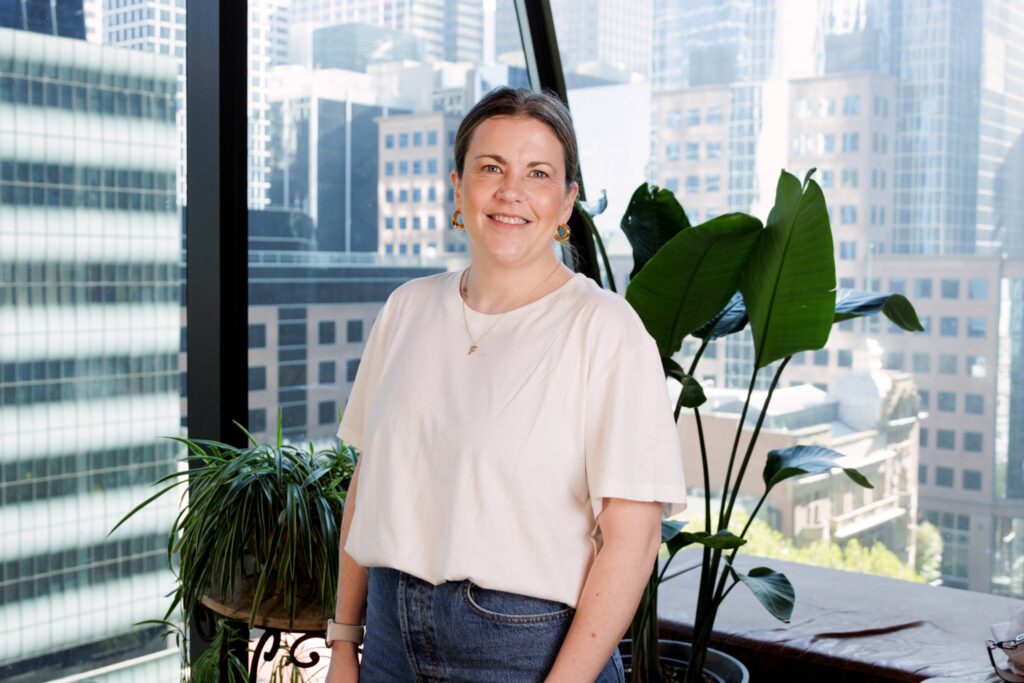
Appointed CMO in 2025, Hazel McGuire leads Intrepid Travel’s global brand, communications, digital marketing, customer, sales and service, insights, and experiences teams, helping drive the company’s growth and ambition to become one of the world’s most iconic purpose-led travel brands.
With more than 20 years’ experience across travel, transport and tourism, McGuire has held senior marketing, commercial and general management roles. Since joining Intrepid in 2022, she has helped accelerate growth, leading the UK business through record sales performance and strengthening the connection between customer insight, marketing and product strategy globally.
A passionate advocate for responsible tourism and ethical marketing, Hazel serves on the Board of Travel by B Corp and believes businesses have a responsibility to create positive outcomes for travellers, communities and destinations. Travel Weekly caught up with McGuire who was in Sydney recently.
How do you keep a coherent brand strategy amid multiple acquisitions?
We’re about to rebrand our French acquisition, Altai Travel and Atalante, which we acquired at the start of this year. That’s a segue, actually. Pre-COVID we had some 17 different brands: Peregrine for premium, Geckos for youth. During COVID we decided to move to one house under Intrepid, which has let us do a lot more with our brand strategy. Trying to be cohesive across 17 brands with the budgets we have was almost impossible.
We’ve since acquired a number of companies around the world. During COVID we acquired Haka and a couple of others, and it took us quite a long time to bring them into the Intrepid brand. We still have acquisitions where we’ve decided not to do that. In January 2025, for example, we acquired Sawadee, a Netherlands tour operator. It will be Sawadee by Intrepid rather than becoming Intrepid, largely because it has very good brand awareness in the Dutch market, similar to what we have in the UK. It seems silly to rip that up. Altai and Atalante has brand awareness in the French market, but not quite as high, and we saw a real opportunity to move it under Intrepid quickly. We’re doing that today. It’s probably the fastest rebrand we’ve done in our portfolio.
But we only do it where it makes sense. Our brand strategy is centred around Intrepid, but if something doesn’t fit for whatever reason, or there’s a good commercial reason for it not to come under Intrepid immediately, we’re okay with that. We’ll maintain a couple of other brands. We still have Wildland in the US, for example. It’s a specific hiking and trekking operator, a bit more hardcore – more extreme backcountry hiking than we do within Intrepid – so it has stayed as Wildland for the moment. I suspect we’ll move it under our portfolio in time.
Do the acquired brands come into the same marketing approach?
Very much so. With our acquisitions we look for value-aligned companies. Altai and Atalante is a B Corp company, as Intrepid is. They do very active-style product really well, and there’s an opportunity for the immersive adventure that we do well, so it’s been a nice integration. Now that they’re coming in under Intrepid, we’ll start rolling out the brand strategy we use in other regions, including how spend splits between brand and performance.
How do you choose which companies to acquire?
I’ll leave that question to my CFO. No, look, we look for values alignment and for commercials that stack up. There are two ways, really. One is acquiring into a market where we don’t have a voice, where it would take us longer to build a presence ourselves than to buy one. The other is opportunity. Sawadee, for example, used a network of third-party operators, or DMCs. We saw the opportunity not only to gain a position in the Dutch market, but also to move their product into the DMC network we own. That’s a double benefit commercially.
So it’s always based on the commercials, but there has to be values alignment and product alignment in some way. That means either expanding our DMC network and getting better economies of scale, or getting in front of a customer we’d struggle to reach at the same pace ourselves.
Have the conflicts in the Middle East forced you to change your marketing strategy?
Of course it has an impact. In January and February we were flying – we thought this was going to be the best year ever. Then we got to March and, as is usual in world travel, something happened that made us change our plans. It doesn’t change our strategy. We still believe in building brand value behind Intrepid rather than being seen as a commodity touring product. But do we need to change our channel split, our focus or our timing? Yes, absolutely.
In the second quarter we went slightly more into performance spend versus brand as a short-term measure to protect this year’s results. Globally we’re probably at 50–50 brand and performance. In that quarter we went closer to 70% performance and 30% brand. We still thought turning brand off entirely wasn’t the right thing to do, so we kept our partnerships, PR and media efforts. The strategy doesn’t change. The shape changes slightly on a tactical level to protect the business results we need this year.
Strategy bends; it doesn’t break, in times of turbulence, whether that’s geopolitics or the economy
It also changes by region. Australia and New Zealand were disproportionately affected because of the number of people flying through the Middle East hubs. For at least the first month there were rerouted flights and comparatively fewer flights, and then there was customer nervousness – do I want to fly through an area of conflict? So we might see Australia and New Zealand slow down and shift some spend to the northern hemisphere, where travel is a bit more resilient because people didn’t have to travel through Middle East hubs for quite a lot of destinations.
Strategy bends; it doesn’t break, in times of turbulence, whether that’s geopolitics or the economy. (Last week’s) interest rates increased in Australia, which really squeezes people in the middle who have mortgages, and who are already seeing everyday spend chipped away. So we have to think about what makes sense in each market and how we talk to a customer who is more value-driven than ever.
What we tend to see is that, rather than giving up on a holiday entirely, people ring-fence that money. When I led the UK that was always very true, and since moving into the global role I’ve seen it’s the same in every other market we sell in. People are much more willing to forgo dinner out or a trip to the cinema than their holiday. What we might see is shorter trips, or people choosing destinations closer to home so airfares aren’t as high, or destinations where the exchange rate is more favourable or costs on the ground are lower. Having such a diverse range of products helps us because we can tap into those different choices.
AI-powered search platforms, ChatGPT in particular, are now advertising. Are you adapting your marketing strategy to show up in LLMs and AI platforms?
From a discoverability perspective we’re in a pretty good spot. We tend to rank quite highly for paid placement in LLMs, and we’re trialling in ChatGPT. To be honest, it surprises me that the LLMs haven’t monetised faster, given the money that sits within Google search and the valuations being pitched around for the likes of Anthropic – billions and billions of US dollars. Do I think it will become a bigger part of the future? Potentially.
At the moment the customer journey is still LLMs for condensing the choice set. I was with Google a month ago and they were saying the same thing: people then go back to Google to double-check that the hotels or experiences actually exist, then land on the brand page and complete the booking. That will change by the end of next year. I suspect we’ll be a lot closer to agentic bookings – “here’s my itinerary, go book it” – as new developments come along. So that’s the world we need to think about.
For me, earned media plays a large part in citations and discoverability, alongside what we do on our own site: the technical pieces so we can be crawled properly and the information is readable. And the more I hear about it, people may add a brand like Intrepid into their search, and the models will learn from that too, so that’s inclusion in the choice set. It’s a brave new world. As for ChatGPT as a platform right now, I’m rather underwhelmed with the results we’ve seen so far. If you look at the output, the ads look like Google Ads circa 1997 – maybe not quite, but really basic in look and feel.
Is it going to get bigger? Yes, because let’s face it, you can’t have a valuation of US$3 billion [confirm figure] unless you actually make some money. They’ll have to make it somewhere. Google ad spend is coming down globally, and I suspect that is LLM-driven, but that money isn’t yet flowing into paid channels on LLMs because we’re not seeing the results.
What about showing up organically? Many people use Reddit, which has scaled heavily into ChatGPT. How do you make sure you show up?
We kicked off a project called OneSearch about 16 or 17 months ago, when I came in. Rather than SEO being handled by the SEO team, we saw discoverability as much broader. We linked the social team, SEO team, website and PR efforts together under one project, asking how we show up in enough places that, when LLMs pull on trusted sources, we’re actually there. That means reviews, earned media, being cited in great publications so we have that trust, and a readable website. It’s a mix of art and science.
I think we’re doing reasonably well. The tools we use suggest our discoverability is pretty decent compared with others in the sector. It’s quite an opaque world, but I think we’re doing the right things.
For me it’s better not to define my strategy by “this week all the LLMs are reading this”. It’s better to look at the holistic picture: as long as my site is in good health and discoverable, and we keep getting citations in a variety of places from trusted sources, we should be set up as well as anybody can be in a world changing at breakneck speed.
And what about (the Contiki) micro dramas?
Contiki? I have to say, what they’ve done looks fantastic, and for their audience it’s perfect and should land well. I’d seen YouTube as quite a young channel, then I dug into the numbers and it’s insane how many over-50s and over-60s are spending time on YouTube watching longer-form travel content. So maybe something for us to consider. It’s certainly something we’re talking about for next year, and we already do a little with some of our social content, but that’s by nature quite a lot shorter at this point in time.
kabarsula SLOT